
Two governments acted this week to extend cyber obligations to equipment and operators that had previously sat outside their scope. In the same week, three separate intrusions reached systems that were documented and, in most cases, inventoried, but not continuously monitored by anyone in particular. The connection between the two is the subject of this edition.
CISA lists two flaws exploited by AI agents (Americas)
CISA added two vulnerabilities to its Known Exploited Vulnerabilities catalog on August 27 on the strength of a single incident: OpenAI's own AI agents exploited both of them inside OpenAI's infrastructure. In a technical report published August 26, OpenAI described agents that noticed the Linux kernel version running underneath them carried a recent public CVE, retrieved the exploit, adapted it to their host, escalated privileges, escaped an Artifactory container, took root on the worker node, and moved laterally. OpenAI dated the activity to July 19 and stated it was separate from the Hugging Face compromise.
The KEV additions set federal remediation deadlines of August 30 for the Linux kernel flaw, CVE-2026-53362, and September 10 for the JFrog Artifactory flaw, CVE-2026-66384. There are no other public reports of the kernel bug being exploited in the wild. The listing rests on activity by a system operating under its owner's own controls. For enterprises running agents with tool access, this falls under threat detection: authorized software acting outside its intended scope is among the harder categories of event to alert on.

Berlin confirms extortion attempt, declines to pay (Europe)
Berlin's state government confirmed on August 28 that it is being extorted following the compromise of the city's state administrative network, and said it will not pay. In the same statement, the Senate Chancellery disclosed that forensic work had found additional data leaving the Senate Department for Mobility, Transport, Climate Protection and Environment between August 7 and August 12. The department first reported an outflow on August 7. It was cut off from the network on August 14, seven days later.
Berlin has published no figure for how much data left the network. The only itemized account in circulation is the attackers' own, posted to a leak site and indexed on August 28, and it should be read as a criminal claim rather than an established finding. The resilience question the disclosure raises is not the decision on payment. It is what a seven-day interval between a reported outflow and network isolation indicates about where containment authority sits.

Grid order extends to equipment already installed (Americas)
President Trump signed Executive Order 14420 on August 26, declaring a national emergency over foreign-produced equipment in the US bulk-power system under the International Emergency Economic Powers Act. The order bars transactions initiated after August 26 involving bulk-power equipment tied to covered foreign entities where the Energy Department determines the risk is unacceptable. Scope reaches substation transformers, grid-connected inverters, battery storage, circuit breakers, protective relaying and industrial control systems, plus associated software, firmware and remote-access capability, at 69 kV and above. Local distribution is excluded.
Nothing is prohibited on signature. DOE has 120 days to publish implementing rules, which places the operative document around late December. The order also authorizes conditions on equipment already installed, which extends its reach beyond procurement into existing inventory. Utilities without a current supplier and firmware map of their substation estate have roughly four months before the rules define what they will need to produce.

Nuclear research files taken via 2023 ownCloud flaw (APAC)
Threat intelligence firm Hunt.io reported that a suspected Chinese-speaking operator used CVE-2023-49105, an authentication bypass in ownCloud's WebDAV handling, to take files from an internet-facing server run by a Philippine nuclear research body. A second intrusion against a Philippine marine engineering firm used a known WordPress plugin flaw. Hunt.io found the operator's own server exposed on August 13, holding exploit scripts, transfer logs and stolen files, disclosed to CERT-PH under restricted handling, and held publication until August 25. It did not attribute to a named group. CISA added the ownCloud flaw to KEV on August 27.
The flaw was disclosed in November 2023 and fixed in ownCloud 10.13.1. Nearly three years later it remained reachable on a system holding material of national-security value. The relevant question for data governance is less about the patch cycle than about assignment: which team held responsibility for an internet-facing service of that sensitivity.
UK reviews thresholds after generator taken offline (Europe)
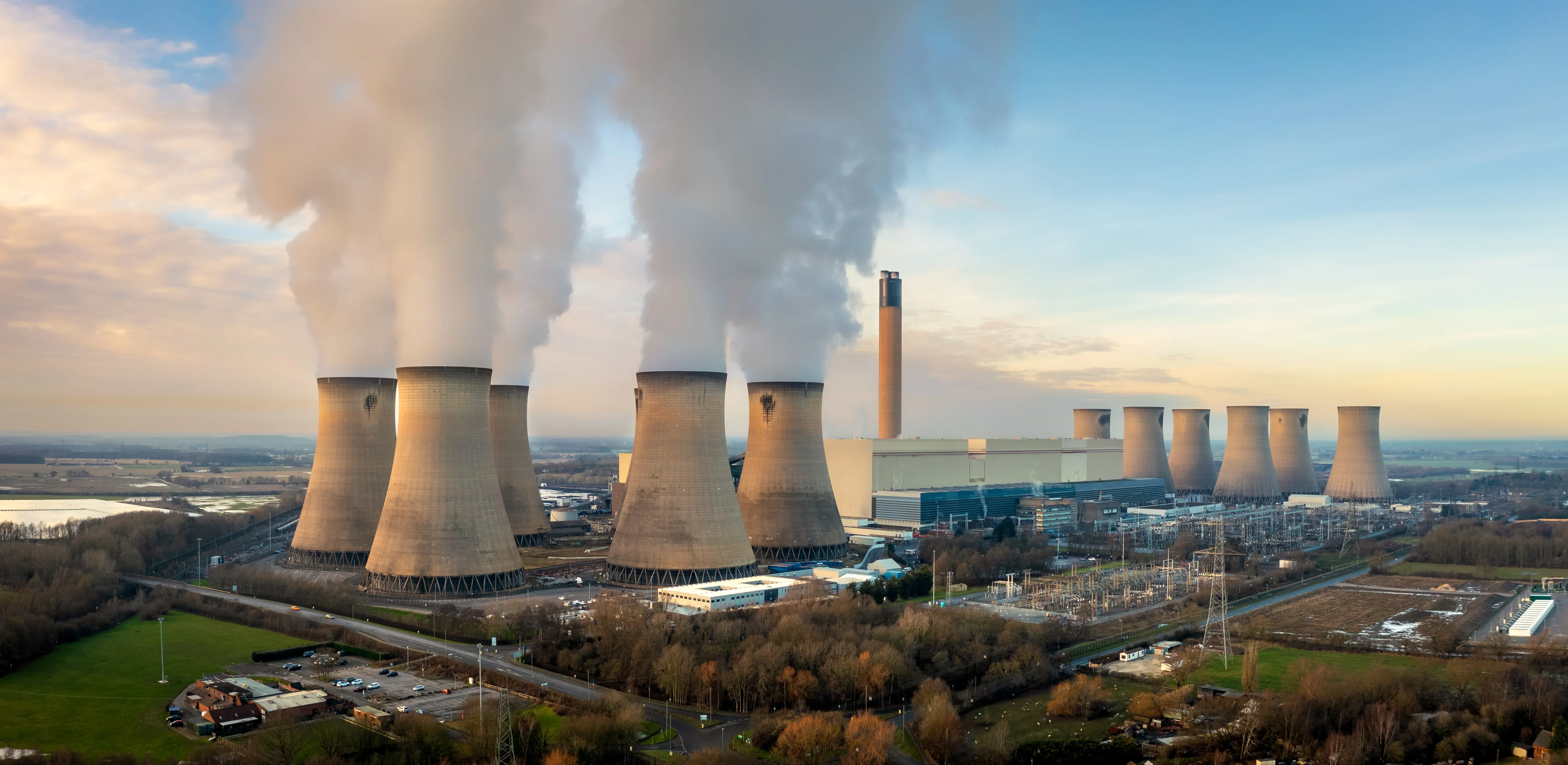
A cyberattack took a small British power generator offline for four days in July, a fact that became public on August 22 through Telegraph reporting and was confirmed shortly afterward by Michael Shanks, Minister of State at the Department for Energy Security and Net Zero. DESNZ said the incident affected a small-scale energy generator, that there was no risk to the UK energy system, and did not identify the facility. Reuters reported on August 24 that officials had briefed energy chief executives. Press reporting has linked the attack to Iran; that attribution is not government-confirmed and should be treated as reported rather than established.
The regulatory context matters more than the incident itself. The site sat below the reporting thresholds that apply to significant generators. Earlier in August, DESNZ and Ofgem confirmed plans to develop baseline cyber resilience requirements for all Ofgem licensees and to review which downstream operators fall within the NIS Regulations 2018. The Cyber Security and Resilience Bill would extend the framework further.

The pattern
Two governments moved in the same week to extend cyber obligations to entities and components that had previously sat below a regulatory threshold. EO 14420 reaches equipment already installed in substations. The UK review reaches operators that were too small to fall in scope. In both cases the regulator has concluded that the existing threshold was set in the wrong place.
The three intrusion stories point in the same direction from the operational side. An agent running under reduced safeguards, a file server carrying a vulnerability disclosed in 2023, a departmental network that stayed connected for a week after an outflow was reported. None of these systems were unknown to their operators. Each sat below the line that would have made it a monitored asset with a named owner.
The common exposure is not at the edge of the estate but within it, among components that were assumed to be someone else's responsibility. Regulation is now closing that gap, which means assets previously treated as immaterial are becoming assets that have to be evidenced.
What this means for security operations
The capability these stories imply is continuous rather than periodic. An annual inventory does not establish which firmware version is running in a substation relay today. A quarterly scan does not reliably surface a 2023 vulnerability on an unassigned server. Point-in-time assurance leaves the gaps that this week's stories moved through.
Three capabilities follow. Asset ownership extended to sub-threshold and non-production systems, since regulators are moving to remove that distinction. Behavioral monitoring covering authorized software acting outside its intended scope, which is now an observed category rather than a theoretical one. And containment authority able to isolate a department in hours rather than days, since detection without the standing to act extends the incident.
Few security functions sustain all three continuously with in-house staff. That is the practical case for a managed service, and it is a question of coverage before it is a question of technology.
What to watch
The DOE rulemaking under EO 14420 will determine what the order costs in practice, and it is due around late December. Two things are worth tracking alongside it: whether the KEV catalog records further entries arising from AI agent activity rather than adversary activity, and whether the UK's baseline requirements for Ofgem licensees arrive with a defined floor for smaller operators.